Fraud & risk

The applied science factory for improving fraud decisions

Pavo learns how your fraud system works across events, rules, models, labels, and outcomes. It builds the evaluation and runs controlled tests to reduce loss while measuring customer friction.

See how Pavo works

Current risk stack

model · rules · review queue

Transaction + device

amount · velocity · fingerprint

Account + network

tenure · links · shared identity

Candidate policies

thresholds · rules · step-up

Policy replay

on labelled history

Shadow mode

decisions logged, not enforced

Fraud loss falls

Pavo learns your current risk stack, reads transaction and account signals together to propose threshold and rule changes, replays each against labelled history, runs the survivors in shadow mode before enforcing them, and writes the measured result back.
  • Increase experimentation velocity

    Explore features, rules, models, thresholds, and review policies in parallel. Move stronger candidates to tests faster.

  • Increase win rates

    Evaluate candidates across attack patterns, cohorts, and asymmetric costs. Reserve live traffic for stronger evidence.

  • Force multiplier for your team

    Automate case analysis, offline evaluation, and experiment preparation.

How it works

Connect your fraud stack

Connect code, events, identity signals, rules, models, labels, case outcomes, review queues, and experiment history.

Build system understanding

Pavo reconstructs how your production system works. Your team verifies the system book.

System bookArchitectureServices, models, pipelinesMetricsDefinitions and ownersFailure modesWhat breaks, and whenExperimentsPast runs and outcomes

Run applied science projects with Pavo

Give Pavo a loss goal and guardrails. It frames the problem, runs analyses, compares policies, and opens PRs.

Frame the problemBuild hypothesesRun interventionsEvaluate offlineLive A/B test

Capabilities

Applied science judgement

Picking the right problem, the right approach, the right lever

  • Finds where the losses are concentrated - which channel, which segment, which attack pattern
  • Knows whether to fix features, rules, model thresholds, or the review queue
  • Grounds it in your own past rule changes and case outcomes, not just what's in the repo
MATURE LOSS · EXAMPLE12%PAYMENTACCOUNTACTIVERETURNNEWFEATURESRULESNEW ATTACK GAPTHRESHOLDREVIEWADD RISK-BASED STEP-UPFOR NEW ACCOUNT ATTACKSTest: mature loss + good-user passMATURE CASESPAST RULE CHANGES

Scientific rigour

Explores widely, and ships only what's proven

  • Tries features, rules, models and thresholds together instead of one rule change at a time
  • You see the catch-rate and false-positive tradeoff on your own labelled cases, before it goes live
  • Checks new and thin-file users separately - no catch-rate win that blocks good customers
REUSEDADD RISK-BASED STEP-UPFOR NEW ACCOUNT ATTACKSTEMPORAL REPLAYLABELS MATUREDFRICTION CHECKS301031BEHAVIOURALDEVICENETWORKRULESENSEMBLEACTIVERETURNNEWHARD BLOCKMANUAL REVIEWSTEP-UP POLICYSELECTEDRISK-BASED STEP-UPEXAMPLE · SHADOW MODE

Knowledge compounds

Every iteration makes the next one cheaper

  • The work itself produces new knowledge - how attack patterns shift, which signals age out, where the catch-rate and friction tradeoff actually sits
  • Written back to your system book, reviewed by your team, reused next time - it stays with you
  • Your team owns the learnings, so v2 to v3 to v4 gets faster, not just further
01LEARN02RETAIN03REUSERisk-based step-upEXAMPLE · TESTEDDevice cluster predicts lossCatch rate hides frictionHard blocks reject good usersYOUR SYSTEM BOOKATTACK PATTERNSMETRIC CALIBRATIONPOLICY HISTORYTIME TO PROOF · EXAMPLE4wV23wV31wV4KNOWLEDGE REUSED

Use-cases

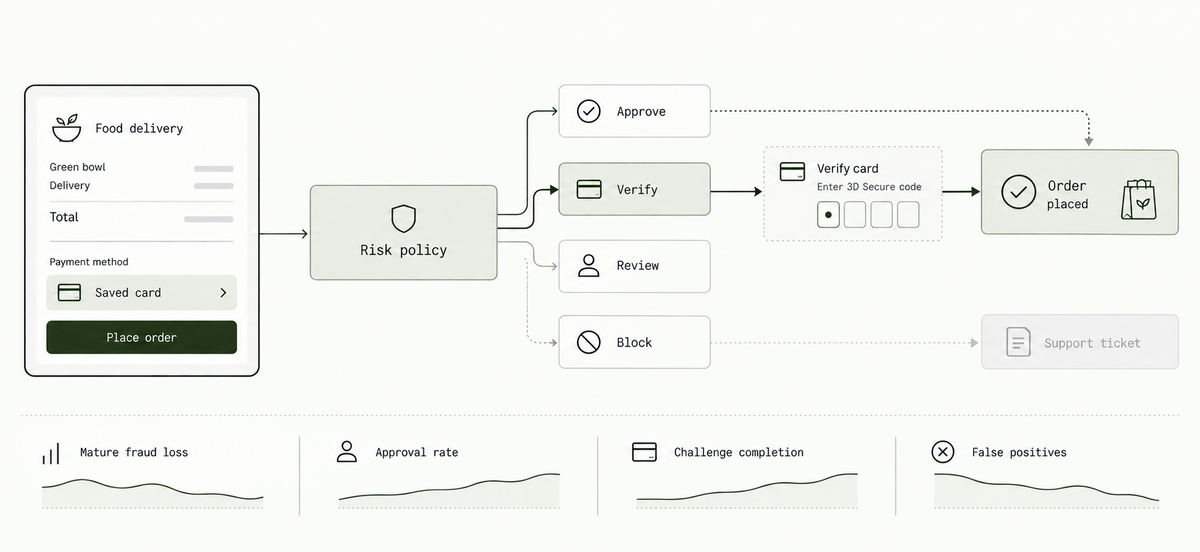
Illustrative marketplace checkout risk policy routing a payment to approve, step-up verification, review, or block, with a legitimate customer completing a verification challenge.

Our fraud controls catch bad actors, but they also block too many good customers

Pavo compares rules, score thresholds, and step-up challenge policies, then measures mature fraud loss, approval, challenge completion, and customer friction by cohort.
Fraud lossApproval rateChallenge completionFalse positives
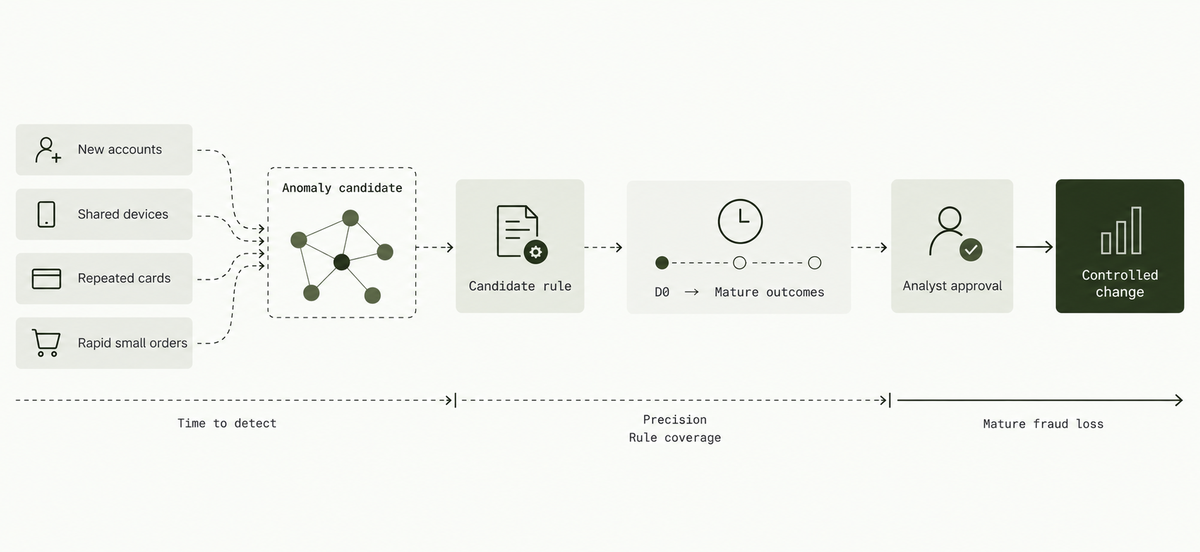
Illustrative digital-payment anomaly timeline: an event-time spike becomes a candidate rule, then waits for mature outcomes and analyst approval before a production change.

New attack patterns spread before our supervised models have labels to catch them

Pavo segments event and entity time series, compares anomaly and rule candidates, then validates precision on mature outcomes before analysts approve a production change.
Time to detectPrecisionRule coverageMature fraud loss
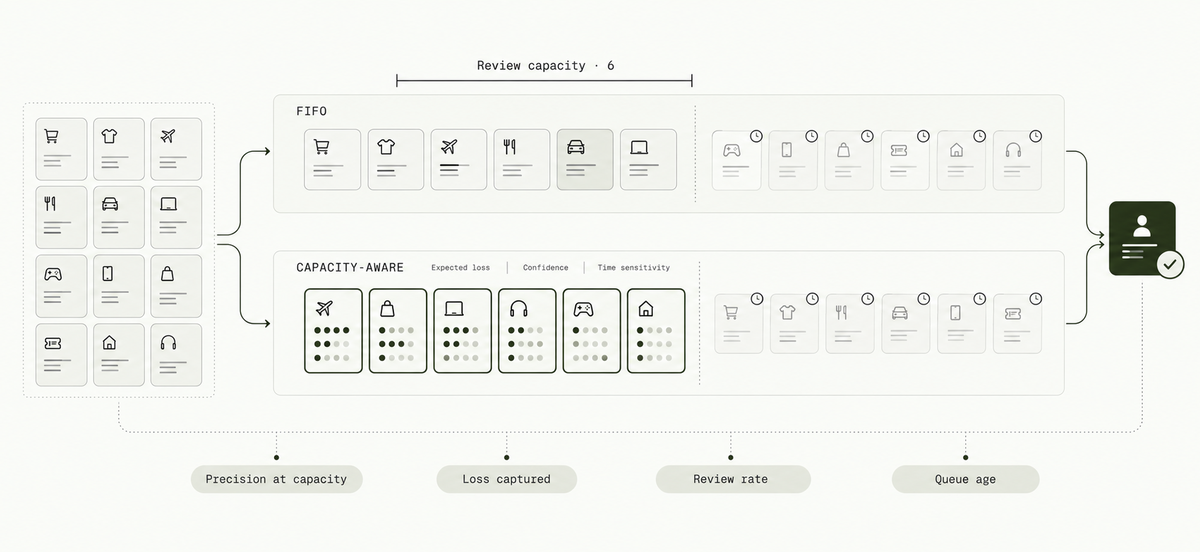
Illustrative marketplace fraud-review queue comparing FIFO with a six-case capacity-aware ranking based on expected loss, confidence, and time sensitivity.

Our review queue fills faster than analysts can investigate the highest-risk cases

Pavo compares score-based and capacity-aware queue rankings, then measures precision and loss captured at each review budget, with delayed outcomes handled explicitly.

Precision at capacityLoss capturedReview rateQueue age

Security and trust

  • ISO 27001

    Certified

  • SOC 2 Type II

    Compliant

  • Encryption

    Encrypted in transit and at rest, with managed production keys.

  • Access control

    Least-privilege access, enforced with MFA and reviewed quarterly.

  • Data control

    Tenant-segmented, with retention and customer-controlled deletion.

  • Monitoring and response

    Continuously monitored, centrally logged, and ready to respond.

  • Tested and patched

    Independently pen-tested, scanned, and kept current against threats.

  • Resilient by design

    Multi-AZ with backups and a tested continuity and recovery plan.

Full reports, policies, and the complete control list are available on request through the Trust Center.

Start with one fraud decision and one loss metric. Pavo helps your team understand the system, evaluate better policies, and ship the first team-approved experiment.